Case Studies
Deep dives into design process, decisions, and measurable outcomes.
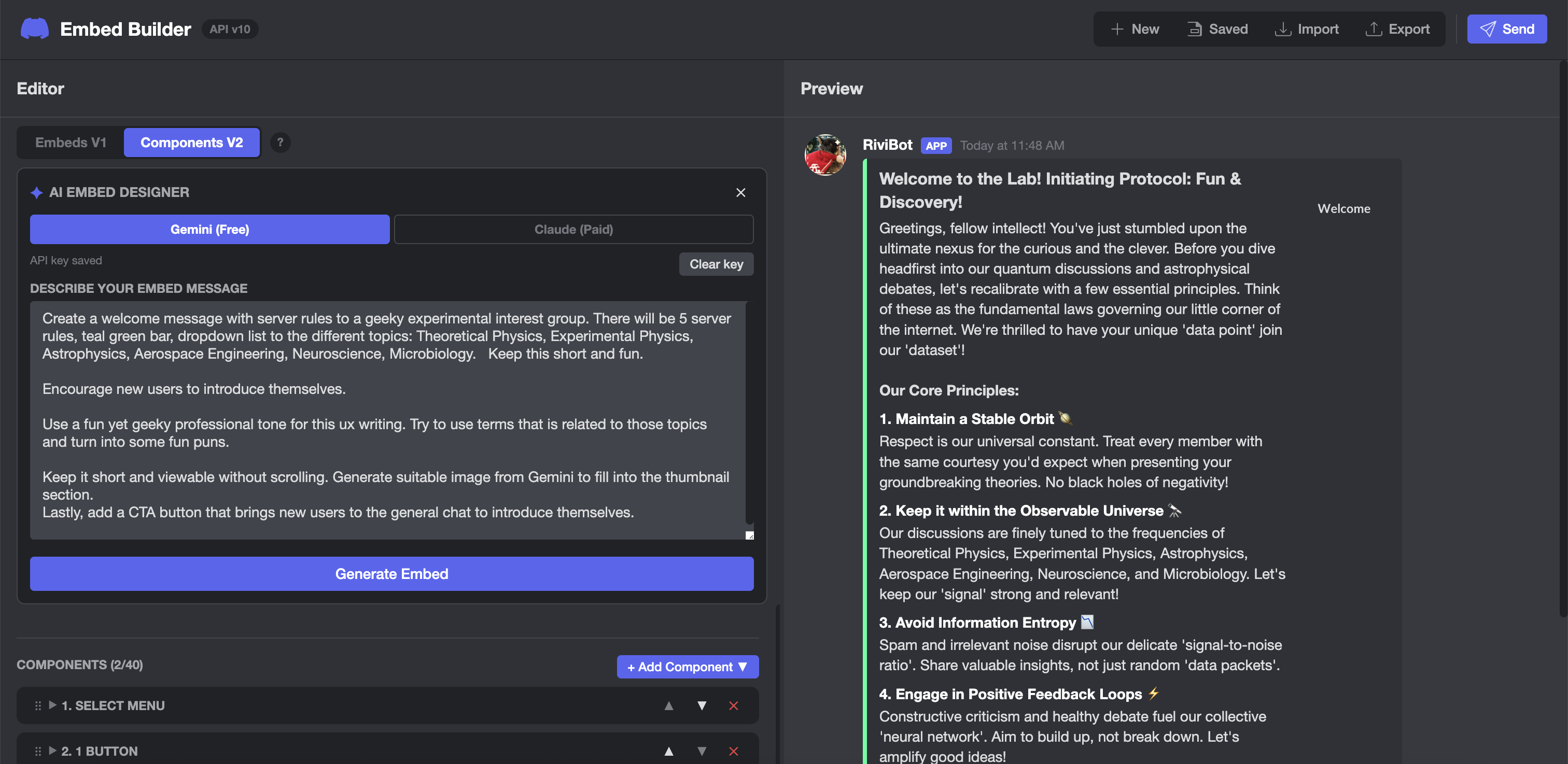
AI-Assisted Discord Tool for Server Communities
Designing an intent-driven AI UX system that reduces technical dependency and accelerates server setup
Faster server activation · Higher message quality
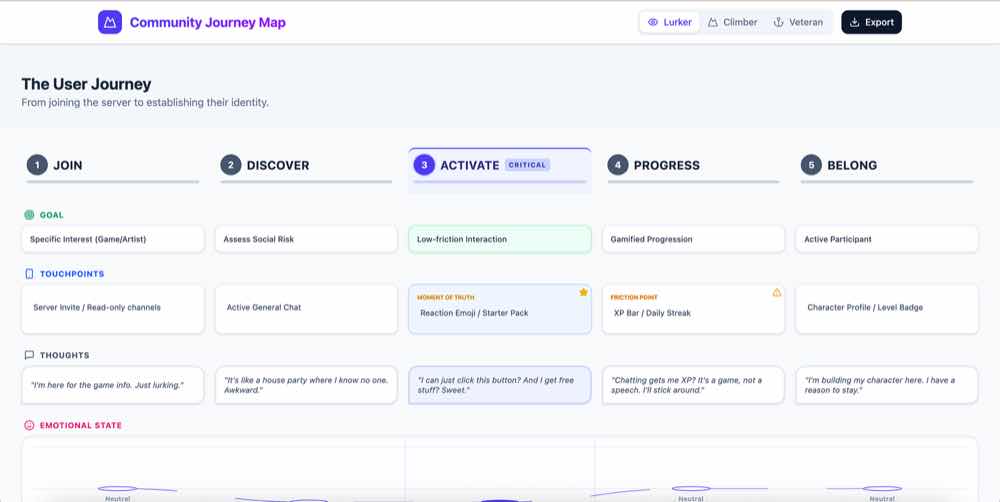
Customer Journey Map
Designing user-centric products begins with understanding how customers experience the product over time.
Improved engagement · Higher retention · Increased user satisfaction
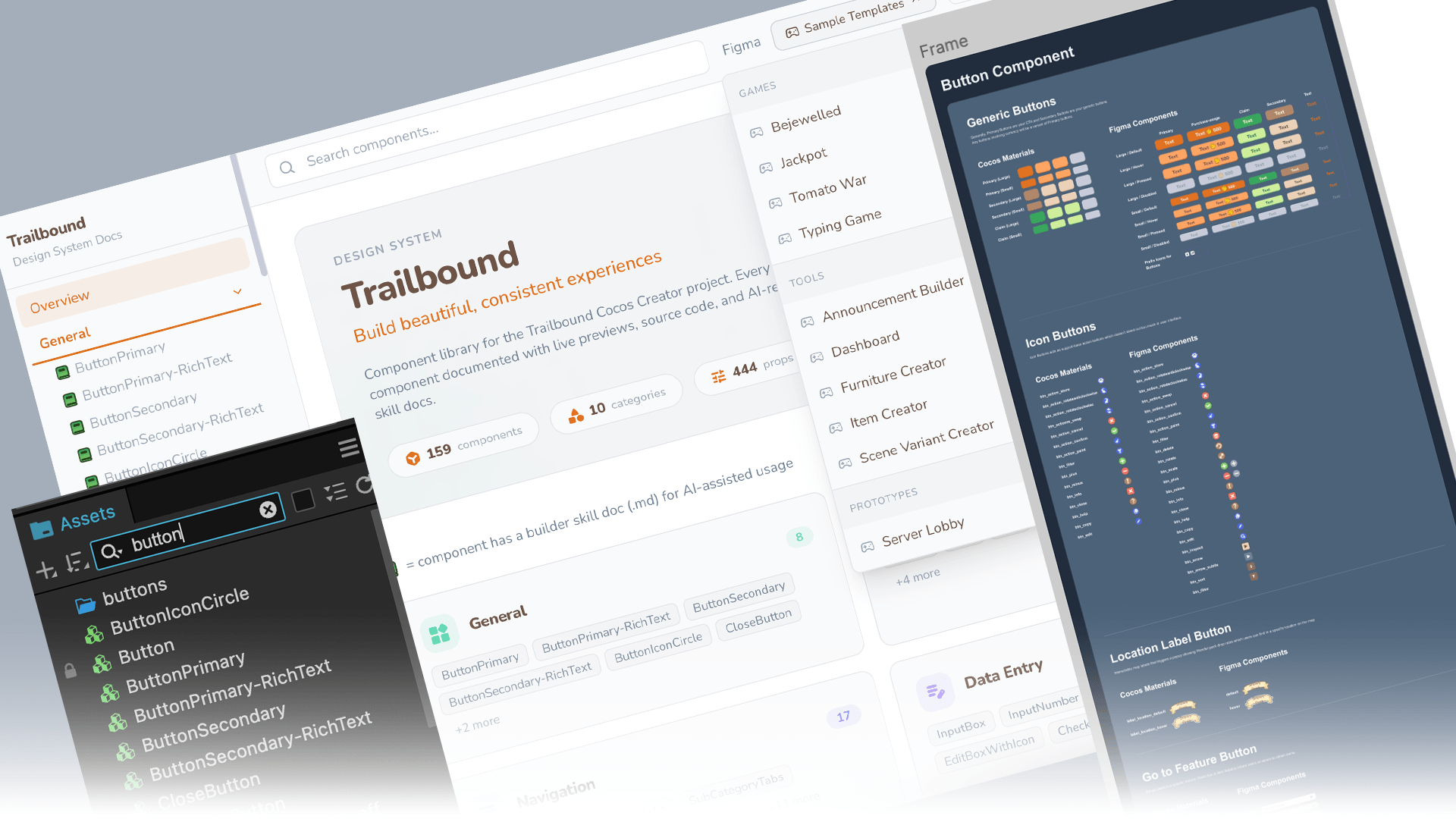
Design System at Scale (AI-First)
Rethinking design systems for an AI-driven future — from designer libraries to machine-readable systems with enforced constraints
AI-compatible pipeline · System-enforced rules
Game UI: Selected Screens
Tatsumeeko
Principal UIUX Designer · Tatsu Works Pte. Ltd. · Company work
A 2D anime RPG with gameplay built natively into Discord. As the sole UIUX designer on a 2-person product team, I owned the full interface: from onboarding flows and game mechanics to a design system built from scratch.
View on Behance →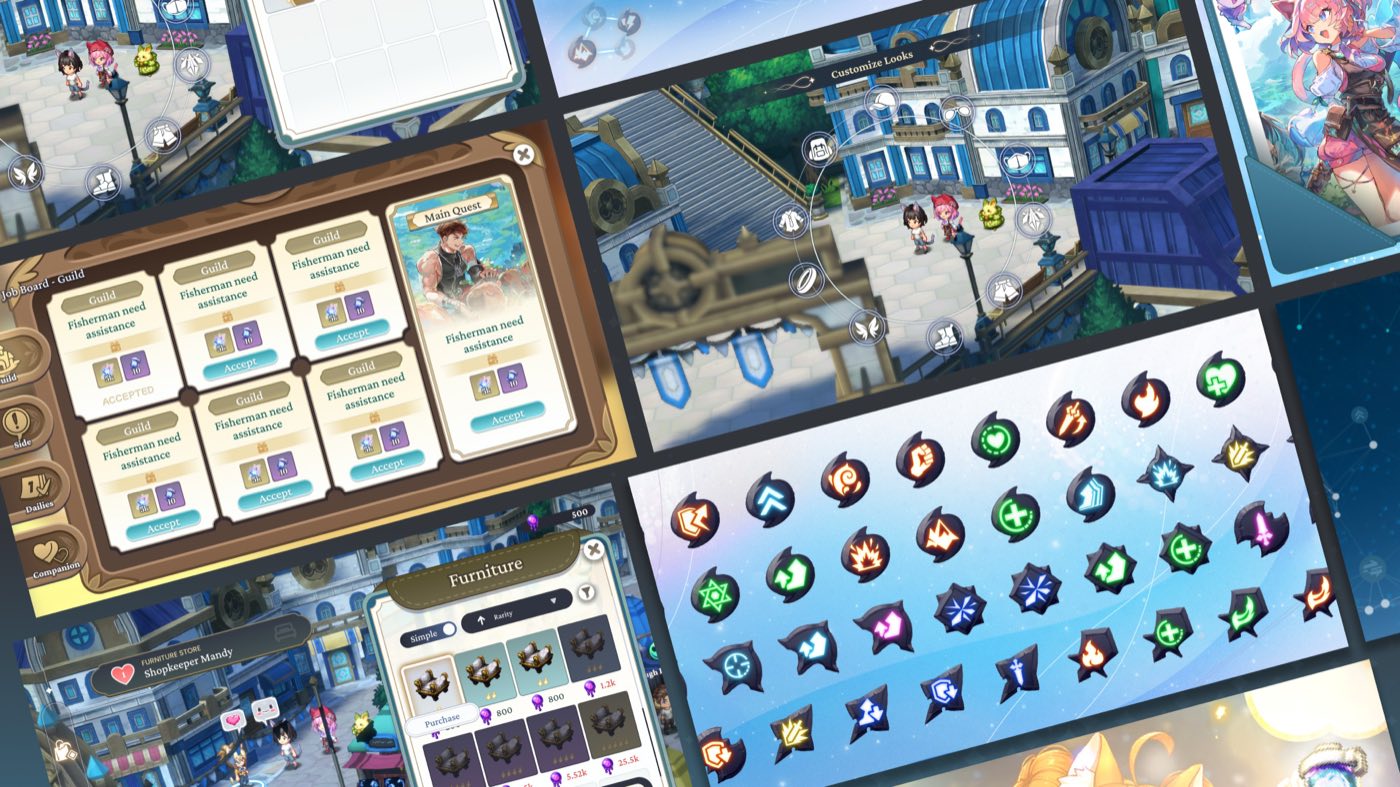
Immersive Learning
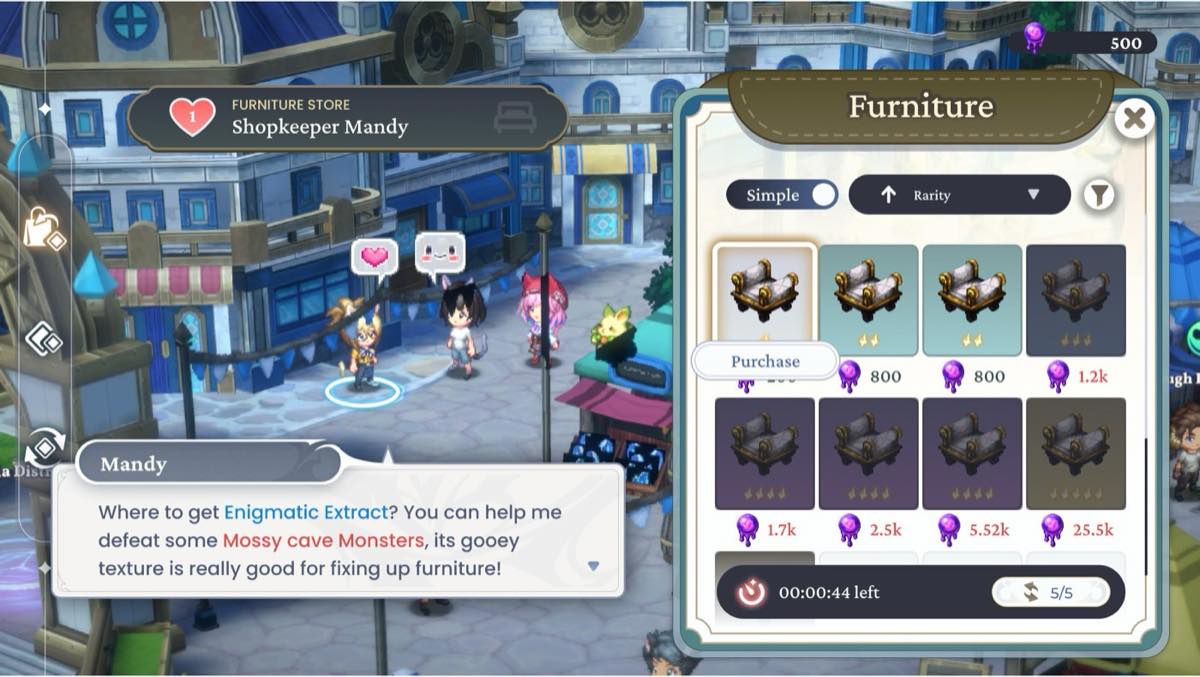
Players struggled to remember which currency was required in the shop, even with the HUD visible, and had no clear path to obtaining it. Rather than adding another instruction screen, I brought the tutorial forward through NPC dialogue, pairing story with imagery to make learning feel natural within the game world.
Each item in the inventory also surfaces its own "How to Obtain" information, giving players a reliable reference point anywhere in the game, without breaking flow.
Battle Pass Reimagined
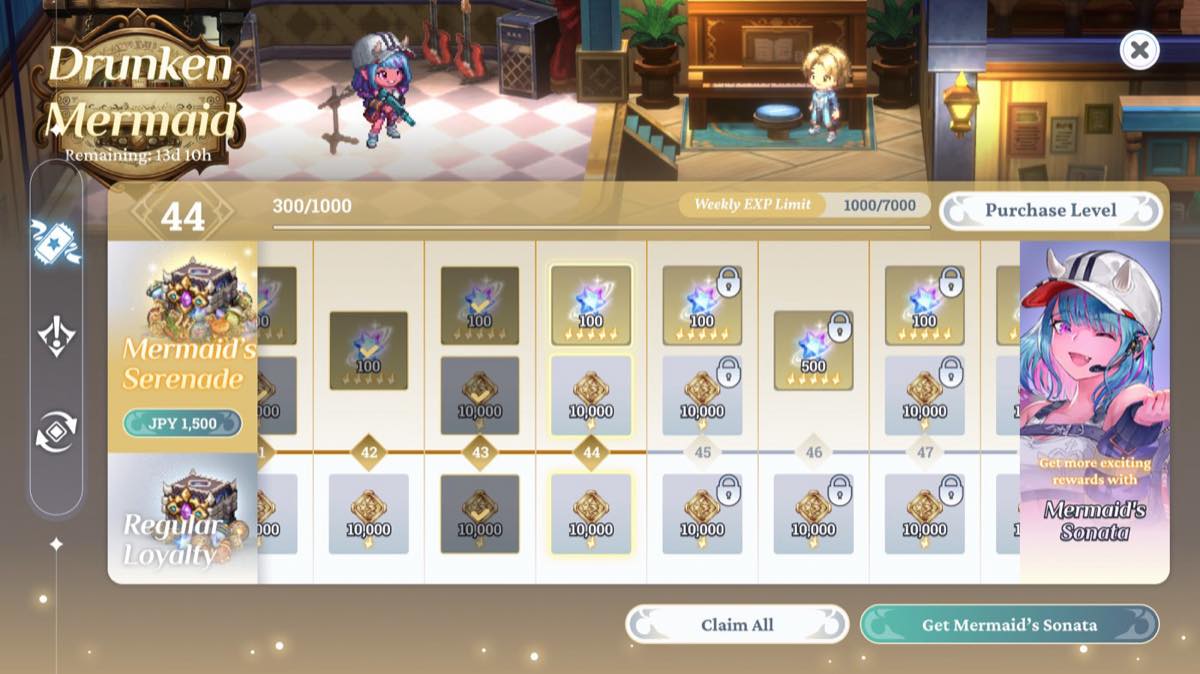
Working alongside composer Tsumugu Misugi, I identified an opportunity to extend the value of a bespoke character theme beyond its original one-time use in a quest. Instead, I proposed integrating it into progression, unlocking the track as a persistent background experience at the final Battle Pass tier. This transforms a purchase from a one-off reward into an ongoing emotional connection with the character and game world.
To reinforce progression further, the in-game environment subtly evolves as players advance, becoming more lively and reflecting the character's growing popularity. This creates a shared sense of progress for free and paying users alike, while giving premium users a deeper, more personal reward.
Check out my colleague's work →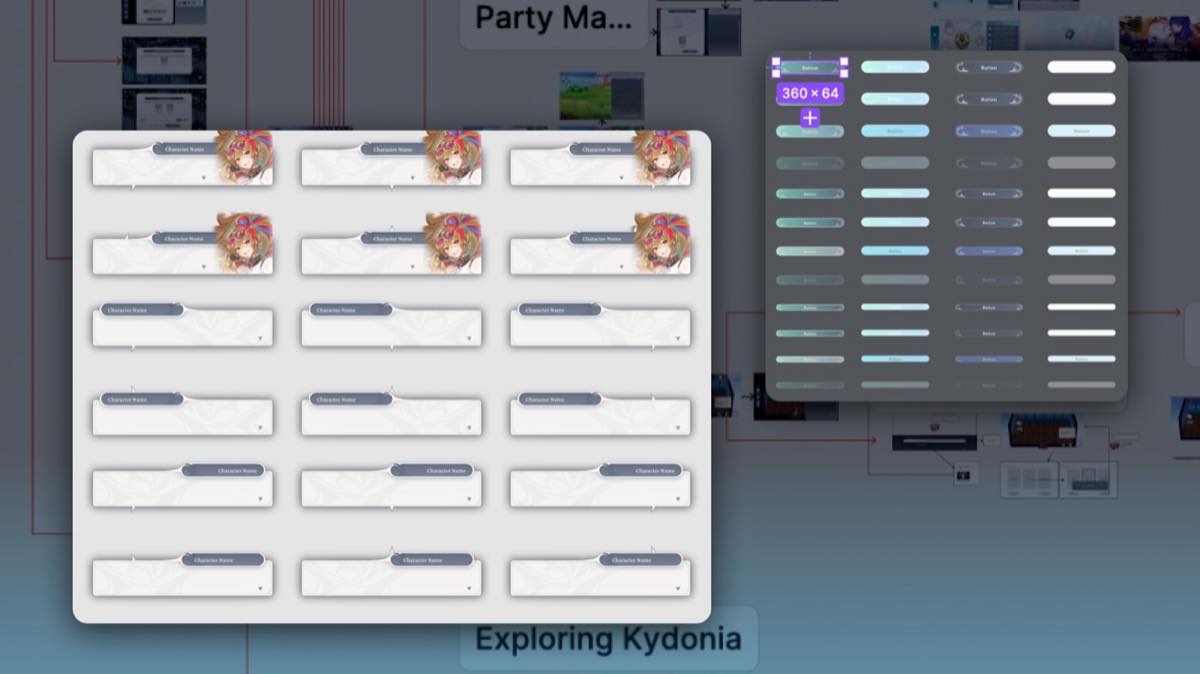
Design System
Built a modular design system single-handedly to support complex, variable-driven UI components across the game.
Instead of designing for fixed use cases, I defined scalable base components with structured variants, allowing elements such as dialogue and inventory to adapt across multiple states, layouts, and contexts. Dialogue components accommodate different directional placements and character configurations; inventory systems scale across categorized and non-categorized formats.
By mapping out these variations upfront, the system gives engineers clear visibility into how components behave across scenarios, reducing reliance on feature-specific prototypes and improving implementation efficiency. This shifts the design system from a static library into a flexible foundation that supports scalability, consistency, and faster iteration across the product.
Game UI: Selected Screens
The Unchartered Dream
Principal UIUX Designer · Tatsu Works Pte. Ltd. · Company work
A 2024 Web3 event website where players could port existing NFTs to a newer platform and stake them for in-event benefits. Designed for both web and mobile, covering the full event experience: from onboarding and daily engagement loops to progression and reward systems.
View on Behance →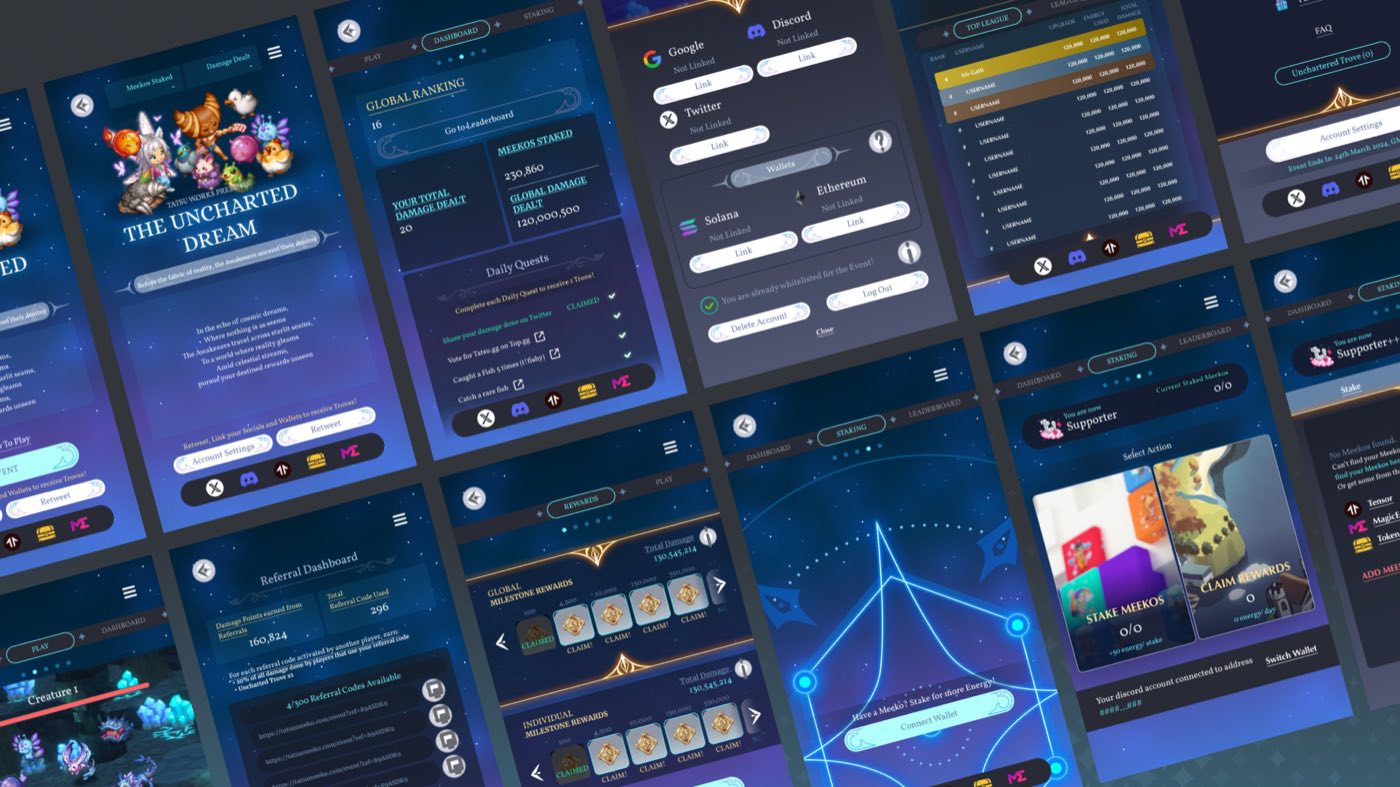
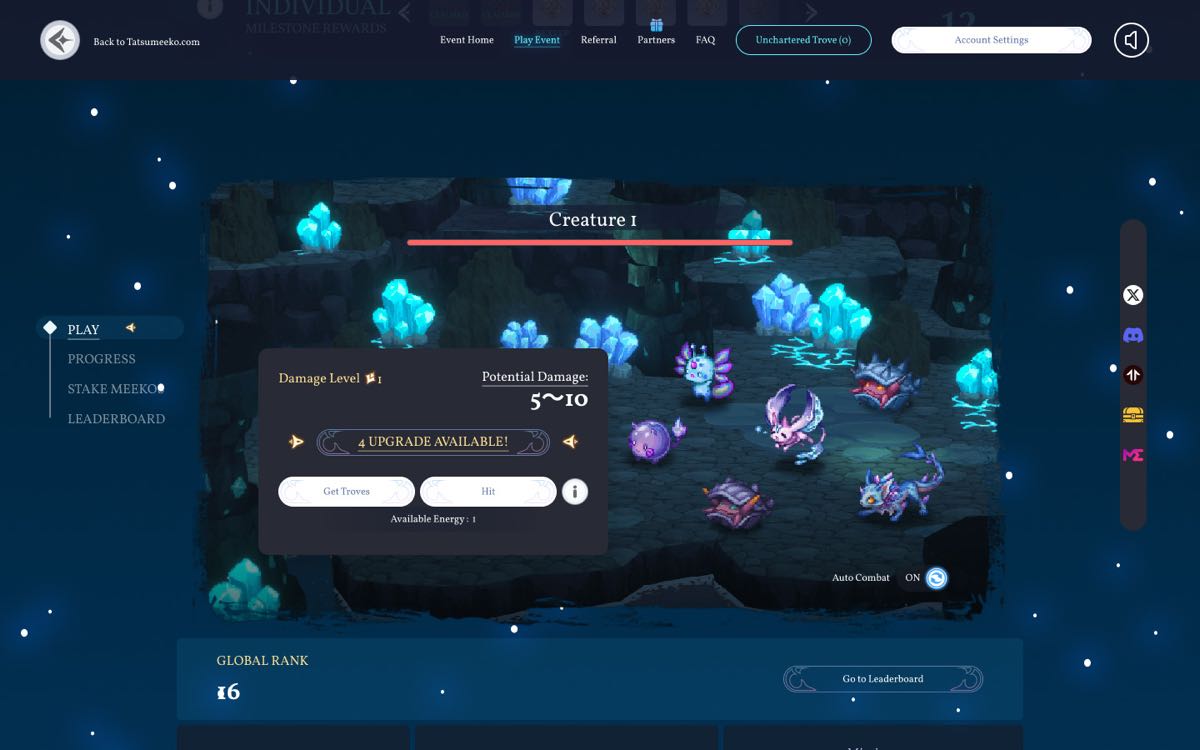
Upgrades
Upgrades act as a key progression lever, increasing damage output while incentivizing repeat engagement through referrals and daily activities.
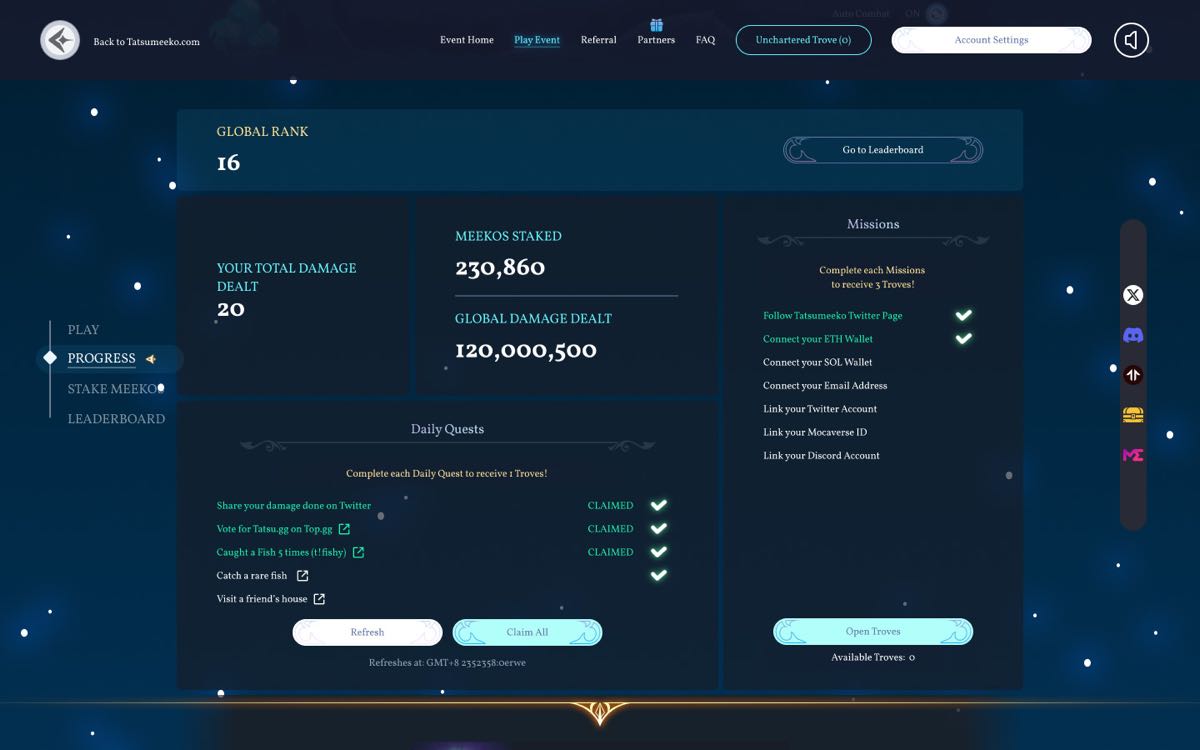
Dashboard
Consolidates key metrics and actions into a single view, reducing friction and supporting continuous engagement loops.
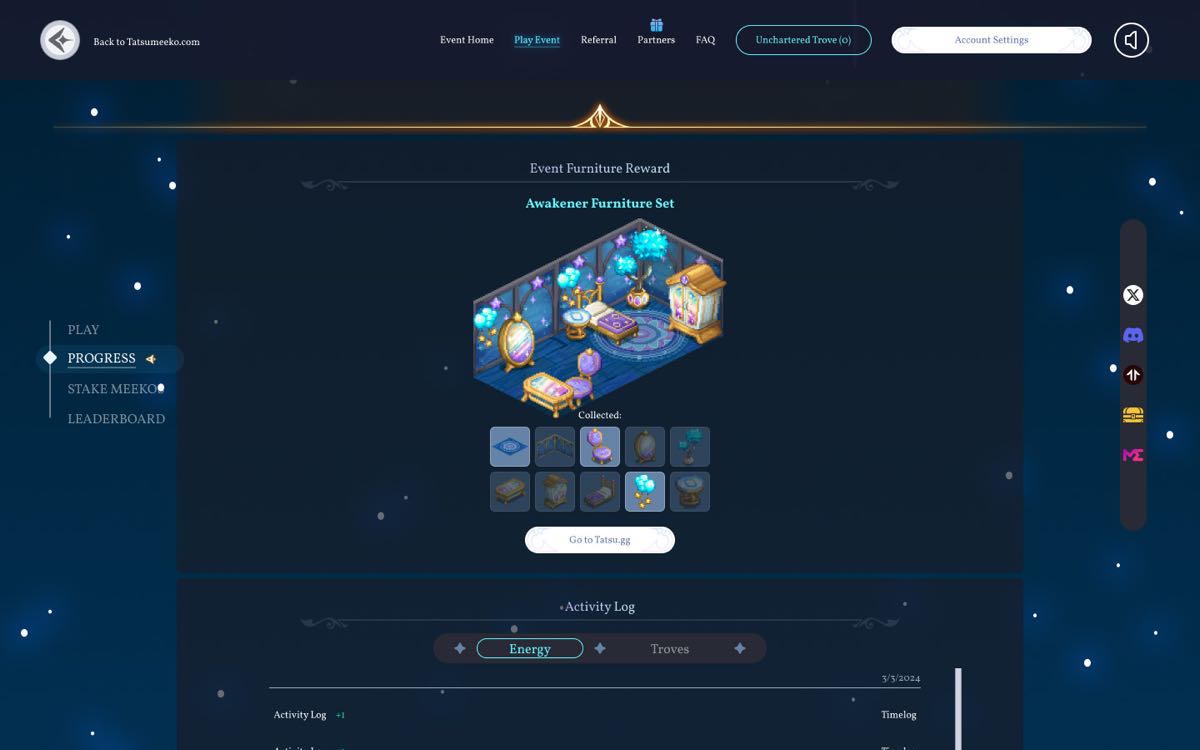
Furniture Rewards
Designed to build desire by revealing the complete furniture set, encouraging users to collect and complete.
Inspired by real-world retail experiences, where visualizing ownership increases intent and motivation. Shifts rewards from “items to unlock” into “spaces to aspire to own.”